Jodie Chesney: The Scout Leader Stabbed in a Random Attack
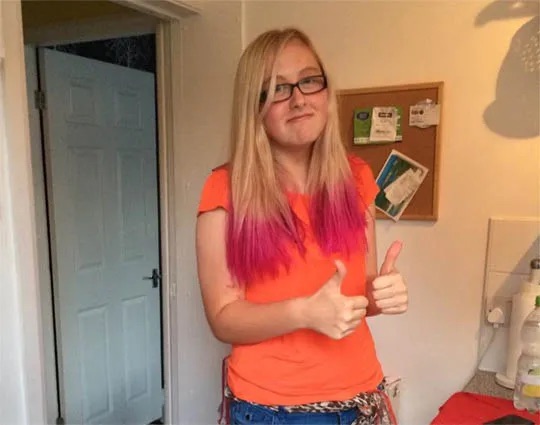
3 November 2025 — Jodie Chesney was sitting on a park bench with friends when she was stabbed in the back. She'd never met her attackers. She wasn't involved in any dispute. She was simply in the wrong place when violent individuals decided to strike.
Her murder on March 1, 2019 - her father's birthday - shook the nation and forced us to confront a painful truth: random knife attacks can happen to anyone, anywhere.
Who Was Jodie?
Jodie Chesney was 17 years old and lived in Upney, Barking & Dagenham, with her very close-knit family. She was studying for her A-levels in Psychology, Sociology, and Photography at Havering Sixth Form.
But Jodie was so much more than a student.
Her Achievements:
- Completed Bronze and Silver Duke of Edinburgh's Awards
- Just weeks away from completing her Gold Duke of Edinburgh's Award
- Active scout volunteer
- Volunteered at Great Runs 5k events
- Supported local scouting activities for Beavers and Cubs
- Learning classical piano
- Passionate photographer who frequently went to London to take photos
Her Character:
Her father Peter describes Jodie perfectly:
"Jodie was an extremely kind and giving person and she will be greatly missed. She was a beautiful, well liked, fun young woman who judged no one and loved everyone. As a little girl she was very shy, but her confidence grew from strength to strength as she got older. Her family, friends and her dog Woody meant the world to Jodie and there was never any hidden agenda, ever. She wore her heart on her sleeve and her infectious laugh would light up any room."
Her best friend Clarice remembers: "She loved taking photographs of literally anything… she'd always come in with a big smile on her face and be like 'let me show you my pictures'."
Her uncle Terry said simply: "She was just wonderful... Bright... she would do anything for anyone."
The Night of March 1, 2019
Jodie was in a park in Romford with her friends, including her boyfriend Eddie. They were sitting on a park bench, listening to music, just hanging out.
It was her father's birthday.
A group wearing balaclavas approached them.
Without warning, without provocation, without any interaction at all:
Jodie was stabbed in the back.
She died in her boyfriend Eddie's arms a short while later.
She was 17 years old.
Jodie was the 19th person to lose their life to knife crime that year.
The Randomness
What makes Jodie's murder particularly haunting is its complete randomness.
Jodie had never met her attackers.
There was no dispute, no argument, no confrontation.
She was simply there.
Two boys - aged 19 and 17 - approached the group wearing balaclavas and attacked. They were convicted of murder and are serving 26 years and 18 years respectively.
But why did they attack? What was their motive?
We may never fully know. That's the terror of random violence - there is no logic, no reason, no way to predict or prevent it.
Jodie did everything right:
- She was in a public place
- She was with friends
- She wasn't involved in any criminal activity
- She had no connection to her attackers
And she was still murdered.
The Devastating Impact
In his victim impact statement, Jodie's father Peter said the death of his daughter "destroyed my life."
"I have lost the most precious human being I will ever know."
Think about that. As a parent, your greatest fear is something happening to your child. For Peter, that fear became reality - on his birthday.
Every birthday for the rest of his life will be the anniversary of his daughter's murder.
Every March 1st, he'll remember her dying in her boyfriend's arms.
Every day, he'll wake up knowing he can no longer hug his daughter, hear her laugh, see her photos, watch her achieve her goals.
That's the reality of knife crime for families left behind.
What Jodie Was Doing When She Died
Jodie was weeks away from completing her Gold Duke of Edinburgh's Award - the highest level, requiring:
- Volunteering for at least 12 months
- Learning a new skill for 12 months
- Physical activity for 12 months
- A 4-day, 3-night expedition
- A 5-day residential project
That's dedication, commitment, and character.
She was studying for A-levels - working toward university and a future career.
She was volunteering with Scouts - giving her time to help younger children have positive experiences.
She was learning classical piano - challenging herself and developing her talents.
She was pursuing her passion for photography - creating art and capturing beauty.
She was living a life of purpose, service, and growth.
And two boys with knives ended it all in seconds.
The Reality of Random Attacks
Jodie's murder forces us to confront uncomfortable truths:
1. There is no profile for victims
Jodie was:
- A girl (knife crime affects everyone, not just boys)
- White (knife crime isn't limited to any ethnicity)
- Middle-class (knife crime doesn't respect socioeconomic boundaries)
- Academically successful (achievement doesn't protect you)
- Community-minded (volunteering doesn't make you safe)
2. You can do everything "right" and still become a victim
Parents tell their children:
- Stay in well-lit areas ✓ (Jodie was)
- Be with friends ✓ (Jodie was)
- Avoid dangerous people ✓ (Jodie did)
- Don't get involved in gangs or crime ✓ (Jodie didn't)
And it still wasn't enough.
3. Public spaces aren't safe
Jodie was in a public park - a place where families go, where children play, where communities gather.
If parks aren't safe, where is?
4. The attackers showed no humanity
They wore balaclavas. They approached a group of young people. They stabbed a girl in the back. They left her to die.
What level of violence have we normalized that this happens?
The "Wrong Place, Wrong Time" Myth
People often say knife crime victims were "in the wrong place at the wrong time."
But think about what that means:
Jodie was in a park with friends on a Friday evening.
That's not the "wrong place." That's a normal, everyday activity.
If a park with friends is the "wrong place," then everywhere is potentially the wrong place.
The problem isn't that victims are in wrong places - the problem is that people are walking around with knives ready to use them on strangers.
What Jodie's Life Meant
To her family: She was a beloved daughter, a wonderful person, the light of their lives.
To her friends: She was fun, caring, loyal - someone who would always have your back.
To the Scouts: She was a volunteer who gave her time to help younger members have positive experiences.
To her community: She was an active, engaged young person making a difference.
To everyone who knew her: She was someone special who brightened rooms with her laugh and her smile.
And to her attackers: She was nothing. A target. An opportunity for violence. A person they could stab without a second thought.
That contrast tells you everything about the problem we face.
The Questions Jodie's Murder Raises
Why were two teenagers in a park with knives and balaclavas?
What led them to that moment? What failures of family, society, education, or intervention allowed them to reach a point where stabbing a stranger seemed like an option?
Why did they choose violence?
What were they trying to prove? To whom? Why did attacking random people seem like a solution to whatever they were feeling?
Why didn't they stop?
At what point in planning this - getting the knives, the balaclavas, going to the park - did neither of them think "this is wrong"?
What were they thinking when they saw Jodie with her friends?
Did they see her as a person? As someone's daughter? As a human being with hopes and dreams?
Or had violence become so normalized that she was just... nothing?
The Ripple Effects
For Eddie, Jodie's boyfriend: He held her as she died. That trauma will never leave him.
For her friends who were there: They witnessed their friend being murdered. They'll carry that forever.
For her fellow Scouts: They lost a mentor, a role model, a volunteer who cared about them.
For her classmates: They had to go back to school knowing Jodie would never complete her A-levels.
For her community: A park that should be a place of joy became a crime scene.
For all young people: The message that nowhere is truly safe, that random violence can find you anywhere.
What We Can Learn
1. Knife crime affects everyone
Jodie's background, achievements, and character didn't protect her. Anyone can become a victim.
2. Random attacks are real
Not all knife crime is gang-related or targeted. Sometimes, people just want to hurt someone - anyone.
3. Public spaces need better protection
How do we make parks, streets, and public areas safer? That's a question we must answer.
4. Early intervention is critical
The boys who killed Jodie were 19 and 17. They'd been on a path to violence for years. We need to intervene earlier.
5. Knife-carrying must become socially unacceptable
Why were these boys comfortable carrying knives? Because somewhere, somehow, it had been normalized for them.
For Young People
If you're reading this, understand:
Jodie was extraordinary - and it didn't protect her.
She was achieving things, helping people, making a difference.
And two boys with knives ended her life for no reason.
If you carry a knife:
- You could become those boys
- You could destroy a family like Jodie's
- You could throw away your own life
- You could kill someone for no reason and have to live with that forever
If you're worried about knife crime:
- Be aware of your surroundings
- Stay in groups when possible
- Trust your instincts
- Report suspicious behavior
- Remember that running away isn't cowardly - it's smart
For Parents
Jodie's parents did everything right:
- They raised a kind, accomplished daughter
- They supported her interests and ambitions
- They were close to her
- They created a loving home
And they still lost her.
That's the horror of random violence - there's no way to fully protect your children from it.
But you can:
- Keep communication open
- Know where they are and who they're with
- Teach them awareness and safety
- Support efforts to reduce knife crime
- Advocate for change
Remembering Jodie
Jodie Chesney would be 23 years old now. She should be:
- Graduating from university
- Pursuing a career in psychology or photography
- Still volunteering and helping her community
- Making her parents proud
- Living the life she worked so hard to build
But she's not. Because two boys decided to carry knives. Because violence had become normalized. Because a system failed to intervene before it was too late.
Jodie deserved better. We all deserve better.
How You Can Help
Support knife crime prevention:
- Donate to organizations working to end knife crime
- Volunteer with youth programs
- Advocate for policy changes
Make public spaces safer:
- Report suspicious behavior
- Support community watch programs
- Demand better policing and resources
Challenge knife-carrying culture:
- Speak out against violence
- Support young people making positive choices
- Share stories like Jodie's
Remember the victims:
- Keep their stories alive
- Support their families
- Make sure their deaths mean something
A Father's Words
Peter Chesney, Jodie's father, said it best:
"No parent or sibling should ever have to go through or see what we have seen."
He's right.
No parent should have to bury their child.
No father should have to remember his birthday as the day his daughter was murdered.
No family should have to visit a cemetery instead of watching their child grow up.
We have to do better. For Jodie. For all the young lives lost. For the ones we can still save.
"She wore her heart on her sleeve and her infectious laugh would light up any room." — Peter Chesney, Jodie's Dad
If you need help or want to report a concern:
- Call Crimestoppers anonymously: 0800 555 111
- Visit our Get Help page for resources
- Talk to someone you trust
Every life matters. Every story matters. Every action to prevent knife crime matters.